THE ONE TRUE FAITH
The One True Faith
Christianity stands apart as the one true faith, its proponents assert, because it unveils the profound mystery of the triune God - Father, Son, and Holy Spirit - a divine communion that defines the essence of existence itself. This revelation, crystallized in John 14:6 where Jesus declares, "I am the way, and the truth, and the life. No one comes to the Father except through me," positions Christ as the exclusive bridge between a fallen humanity and its Creator.

The Trinity
The Trinity is not a mere theological abstraction but the heartbeat of reality: the Father as the sovereign architect of all things (Genesis 1:1), the Son as the incarnate Redeemer who enters history (John 1:14), and the Spirit as the sustaining presence who renews and empowers (Acts 2:4).
Jesus Christ, fully God and fully man, embodies this truth, fulfilling ancient prophecies - such as the suffering servant of Isaiah 53, the Davidic king of Psalm 2, or the promised Messiah of Micah 5:2. His death on the cross and triumphant resurrection, as affirmed in Acts 4:12 ("There is salvation in no one else, for there is no other name under heaven given among men by which we must be saved"), dismantle the power of sin and death, offering humanity its sole path to reconciliation with God.
This is not a relative claim among many but an absolute declaration, rooted in divine authority, that demands a response from every corner of the earth.

Every Nation needs Christ
Every nation, therefore, needs to turn to Christ - not just as a cultural preference but as a necessity woven into the fabric of creation. This need arises from three interlocking imperatives: alignment with divine truth, the pursuit of eternal hope, and the establishment of justice and morality grounded in God’s unchanging word.
First, divine truth, as revealed in scripture, is the compass by which nations must navigate. The Bible presents a coherent narrative - from creation to redemption to restoration - that reflects God’s ultimate reality (2 Timothy 3:16-17). Nations that embrace Christ align with this truth, acknowledging their place in a cosmic order ordained by the triune God.
Second, Christianity offers eternal hope, a promise transcending the fleeting triumphs of earthly power. In a world marred by suffering - wars, famines, and injustice - Christ’s resurrection assures believers of a future where "He will wipe away every tear" (Revelation 21:4), a hope that infuses national life with purpose beyond mere survival.
Third, justice and morality, rooted in God’s immutable character (Malachi 3:6), provide a stable foundation for societal flourishing. Biblical principles - love your neighbour (Leviticus 19:18), uphold the oppressed (Isaiah 1:17), judge impartially (Deuteronomy 16:19) - have historically shaped enduring institutions, from the early church’s care for widows to the abolition of slavery driven by Christian conviction. Without this divine anchor, nations risk building on sand, subject to the shifting tides of human opinion.
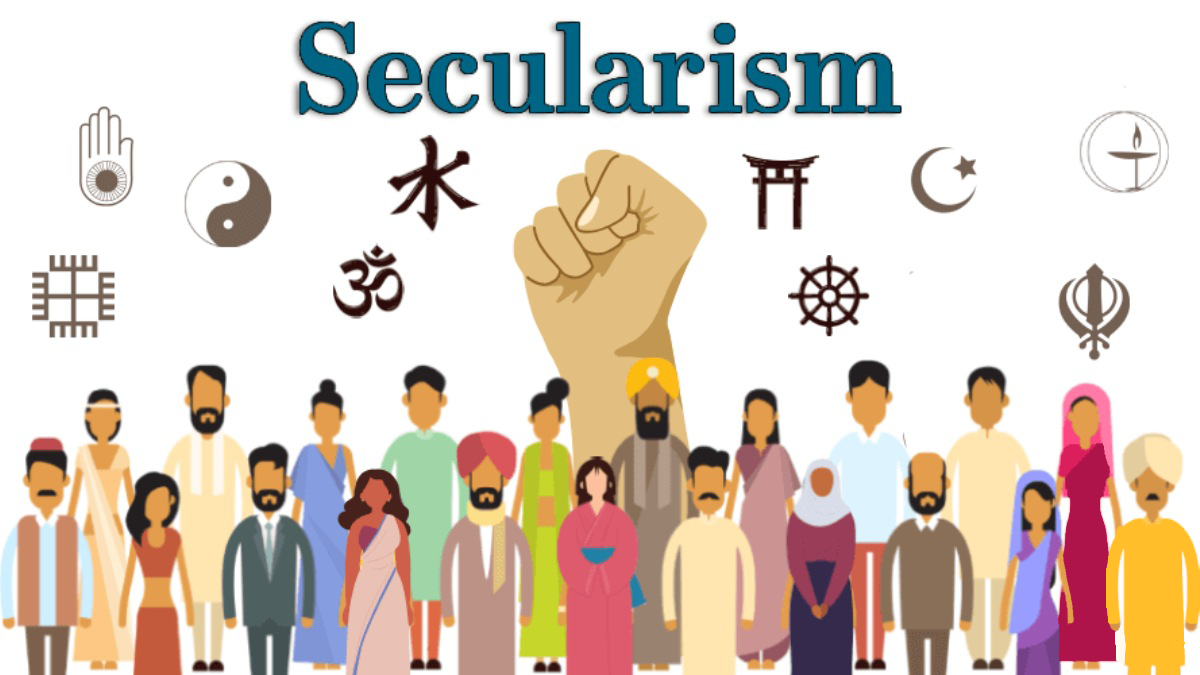
The Fate of Apostate Nations
The absence of Christ, however, leads societies into a perilous drift toward secularism, a worldview that rejects transcendent authority for the illusion of human self-sufficiency. This drift strips nations of their deeper identity, eroding the shared values that once bound them. Where Christianity once forged a collective purpose - think of Europe’s cathedrals symbolising a unified faith or America’s founding documents echoing biblical ideals - secularism replaces it with a vacuum, filled by transient ideologies.
The consequences are stark and threefold: chaos, idolatry, and spiritual emptiness. Chaos emerges as moral relativism takes hold; without a fixed standard, right and wrong become matters of preference, leading to societal fractures - evident in today’s polarised debates over life, family, and freedom. Idolatry follows as nations turn from God to false gods - wealth (capitalism’s excesses), power (authoritarian regimes), or self (narcissistic individualism) - each a hollow substitute for divine worship. Spiritual emptiness, the final fruit, manifests in the despair of modern life: rising suicide rates, pervasive anxiety, and a loss of meaning, as documented in studies of post-Christian societies like Sweden or Japan, where material wealth coexists with existential void.
This pattern is not theoretical but observable across history and the present world. The Old Testament chronicles Israel’s repeated descent into chaos when it abandoned God for idols (Judges 2:11-19), a cycle mirrored in nations today. Secular experiments - Soviet atheism, Maoist materialism - produced tyranny, not harmony, proving humanity’s inability to self-redeem. Even prosperous secular democracies, like those in Western Europe, show signs of identity loss: declining birth rates, cultural fragmentation, and the rise of nationalist or hedonistic movements to fill the spiritual gap.
Conversely, Christianity’s influence has often brought transformation. The early church elevated women and slaves (Galatians 3:28), medieval monks preserved knowledge through dark ages, and missionaries spread literacy via Bible translation (e.g., Cyrillic script’s origins). Modern examples abound - Christian-led movements ended slavery in Britain and today provide global aid through organisations like World Vision.

The Great Commission
The Great Commission (Matthew 28:19-20) extends this call to all nations, suggesting that God’s plan encompasses not just individuals but entire peoples, destined to reflect His kingdom (Revelation 7:9).
Why, then, does every nation need Christianity? Because, it alone addresses humanity’s deepest needs—truth, hope, and righteousness—through Christ’s unique person and work.
Other faiths or philosophies, while offering wisdom, lack the incarnational claim of God entering history to redeem it. Islam reveres a distant Allah, Buddhism seeks escape from suffering, and secular humanism bets on progress without a telos - all fall short of the triune God’s personal, redemptive love.
Critics might protest: what of thriving non-Christian nations like India or Confucian China? Or stable secular states like Norway? The response is that temporal success cannot mask eternal deficiency; without Christ, these societies remain estranged from their Creator, their virtues incomplete. Christianity’s historical flaws are admitted as human failures, not indictments of Christ’s truth, which remains unblemished.
Christianity’s claim as the one true faith, revealing the triune God and offering salvation through Jesus, makes it indispensable for every nation.
It aligns them with divine reality, secures their eternal destiny, and roots their moral order in God’s word. Without it, the drift into secularism unravels identity, ushering in chaos, idolatry, and emptiness - a fate seen unfolding globally today.
This is not a call to domination but to restoration, a plea for nations to find their true home in the One who made and redeemed them. DEUS VULT!