THE LGBTQ+ AGENDA
The Bible on LGBTQ+
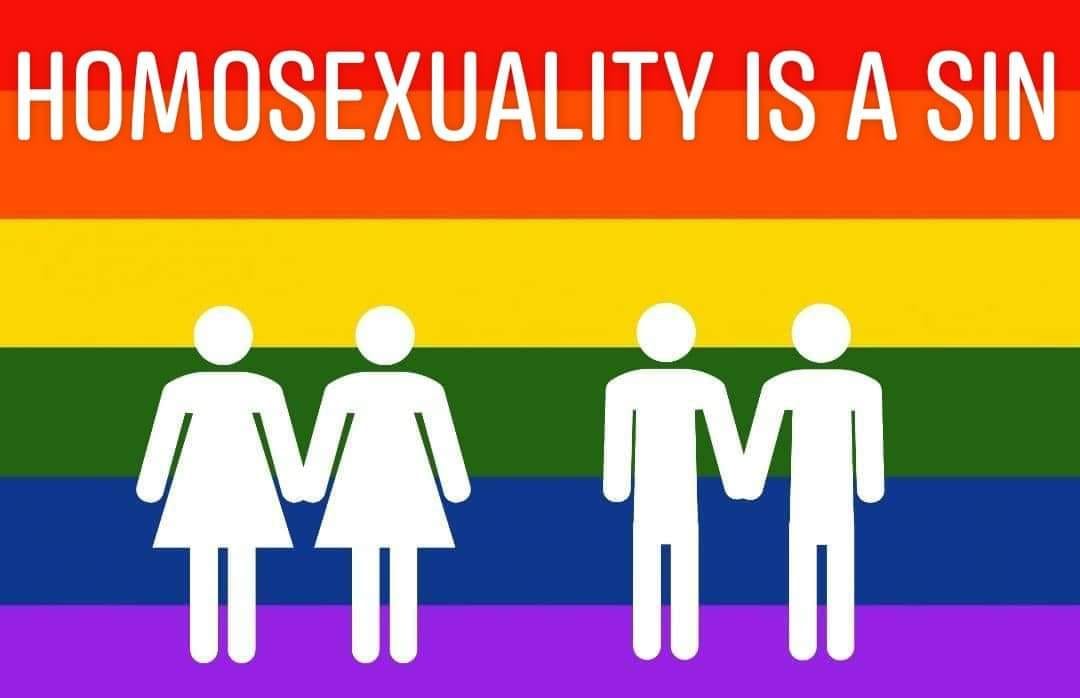
Leviticus 18:22 states unequivocally, "You shall not lie with a man as with a woman; it is an abomination," establishing homosexuality as a violation of God’s ordained order. This command, nestled within a broader list of sexual sins, reflects the holiness code given to Israel to distinguish it from surrounding nations’ practices.
Similarly, Romans 1:26-27 expands this prohibition: "For this reason God gave them up to dishonourable passions. For their women exchanged natural relations for those that are contrary to nature; and the men likewise gave up natural relations with women and were consumed with passion for one another, men committing shameless acts with men and receiving in themselves the due penalty for their error." Paul frames these acts as a rejection of God’s design, a descent into idolatry where humanity worships the creature rather than the Creator (Romans 1:25).
Genesis 2:24 - "Therefore a man shall leave his father and his mother and hold fast to his wife, and they shall become one flesh" - grounds this in creation: sexuality is designed for a complementary union between one man and one woman, with procreation and mutual sanctification as its purpose (Genesis 1:28: "Be fruitful and multiply").
Transgenderism, though not explicitly named, is implicitly rejected by this binary framework, as Deuteronomy 22:5 forbids cross-dressing ("A woman shall not wear a man’s garment, nor shall a man put on a woman’s cloak, for whoever does these things is an abomination to the Lord your God"), signalling God’s intent for distinct male and female identities.
These practices - homosexuality, gay marriage, and transgenderism - defy the created order by severing sexuality from its procreative end, thus threatening societal stability. God’s command to "be fruitful and multiply" (Genesis 1:28) ties human flourishing to reproduction within heterosexual marriage, a structure reinforced by Jesus in Matthew 19:4-6: "Have you not read that he who created them from the beginning made them male and female… so they are no longer two but one flesh?" Gay marriage, by uniting same-sex partners, inherently cannot fulfil this mandate, while transgenderism disrupts the biological complementarity essential for natural reproduction.
Eternal Consequences
These practices - homosexuality, gay marriage, and transgenderism - defy the created order by severing sexuality from its procreative end, thus threatening societal stability.
God’s command to "be fruitful and multiply" (Genesis 1:28) ties human flourishing to reproduction within heterosexual marriage, a structure reinforced by Jesus in Matthew 19:4-6: "Have you not read that he who created them from the beginning made them male and female… so they are no longer two but one flesh?" Gay marriage, by uniting same-sex partners, inherently cannot fulfil this mandate, while transgenderism disrupts the biological complementarity essential for natural reproduction.
The Bible warns of consequences: 1 Corinthians 6:9-10 lists "men who practice homosexuality" among those who "will not inherit the kingdom of God," and Jude 7 cites Sodom’s "unnatural desire" as a prelude to divine judgment.
Gay marriage and transgenderism, by normalising non-procreative lifestyles, erode the reproductive foundation Scripture upholds (Matthew 19:4-6), inviting societal chaos and moral decay akin to Isaiah 3:9’s warning: "They proclaim their sin like Sodom; woe to them!". Leviticus 20:13 prescribes death for homosexual acts, reflecting their severity in God’s eyes, while Isaiah 3:9-12 warns that sexual rebellion brings societal ruin: "Woe to them! For they have brought evil on themselves."
Legalising or normalising these behaviours, from this view, invites societal decay and divine displeasure, echoing Romans 1:32’s condemnation of those who "approve of those who practice them."

Worldly Consequences
This decay manifests in society’s demographic and moral unraveling, with reproduction stifled as a direct result. Globally, fertility rates are plummeting - down from 5 births per woman in 1950 to 2.3 in 2021, per the United Nations Population Fund - with many Western nations below the replacement rate of 2.1. While factors like abortion and contraception contribute, the rise of LGBTQ+ identities exacerbates this trend.
In the U.S., same-sex households doubled from 0.5% in 2000 to 1% in 2021 (U.S. Census Bureau), and while many adopt or use surrogacy, natural reproduction within these unions is impossible. Gallup reports 7.2% of U.S. adults identified as LGBT in 2022, up from 3.5% in 2012, with Gen Z at 19.7% - a growing cohort less likely to procreate traditionally.
Transgenderism further complicates this: hormone treatments and surgeries often render individuals infertile, with a 2021 UCLA study estimating 1.6 million transgender Americans, a number rising annually. These shifts, while small in absolute terms, signal a cultural move away from the reproductive family unit, accelerating population decline already evident in nations like Japan (125 million in 2020 to a projected 88 million by 2065) and Europe (projected 7% drop by 2050).
This demographic crisis undermines society’s foundation - fewer children mean aging populations, strained economies, and weakened cultural continuity. In 2022, the U.S. Social Security Administration projected insolvency by 2035 due to a shrinking worker-to-retiree ratio, a trend worsened by low birth rates.

LGBTQ+ Friendly Churches
Churches that condone and / or promote LGBTQ+ ideologies should be avoided because they fundamentally reject biblical authority and God’s created order, leading believers astray and weakening societal foundations.
These churches distort truth to appease culture, fulfilling 2 Timothy 4:3-4’s prophecy of "itching ears" seeking pleasing doctrines over sound teaching. By affirming sin rather than calling for repentance (Mark 1:15), they abandon their role as salt and light (Matthew 5:13-16), offering false comfort instead of salvation.
Such a shift has practical consequences. These churches risk misleading their followers by offering affirmation where correction might be needed, potentially jeopardising the spiritual health of individuals who look to them for guidance. Instead of challenging behaviours that traditional doctrine views as contrary to divine intent, they conform to societal pressures, diluting their role as moral and spiritual anchors. This can lead congregants into a false sense of security, prioritising personal desires over a transformative faith journey.
This betrayal misleads congregants, risking their eternal fate (Romans 6:23). Moreover, promoting non-procreative lifestyles undermines society. True churches speak truth in love (Ephesians 4:15), condemning sin to redeem, not condoning it to conform.
Avoiding such churches is thus a matter of preserving authentic faith and societal stability. They represent a departure from the historical Christian vision of human purpose, trading it for a fleeting alignment with modern values. This not only endangers the spiritual lives of their members but also contributes to a broader unraveling of the moral and demographic fabric essential for thriving civilisations.
Seeking churches that uphold traditional teachings ensures a commitment to both eternal principles and the practical needs of humanity’s future.

Compassionate Condemnation
Today’s cultural embrace - e.g., 70% U.S. approval of same-sex marriage (Gallup, 2022) - mirrors Romans 1’s descent into approving sin, replacing God’s order with human autonomy, leading to chaos and spiritual emptiness.
In truth, condemning such behaviour is not hateful but a loving act. Scripture calls believers to "speak the truth in love" (Ephesians 4:15), reflecting God’s character: "Faithful are the wounds of a friend" (Proverbs 27:6). Jesus showed compassion to sinners - like the adulteress (John 8:7-11) - but demanded repentance ("Go and sin no more"), not affirmation.
Condemning sin warns of its consequences - eternal separation (Romans 6:23) and societal ruin - offering a path to redemption. Parents discipline children out of love (Hebrews 12:6); likewise, upholding God’s standards seeks to save individuals and nations from self-destruction. Tolerance of sin, conversely, is apathy, enabling harm like Sodom’s fall (Genesis 19:24-25).
Legal measures reflect this love, balancing compassion with fidelity to God’s design. While individuals deserve compassion - mirroring Christ’s mercy - societal endorsement of homosexuality and transgenderism defies His order, risking judgment (Romans 1:32).
Criminalising LGBTQ+ behaviours, from this perspective, aligns with divine law and protects society. It upholds the biblical standard—reinforced by 1 Timothy 1:8-10, where "the sexually immoral" and "men who practice homosexuality" justify lawful restraint - while deterring acts that thwart reproduction and invite judgment, preserving a nation’s future as an act of stewardship and care.
Compassion toward individuals, as modelled by Jesus with the adulteress (John 8:7-11), is not leniency toward sin; it calls for repentance, not affirmation. Legal measures reflect a nation’s commitment to God’s design, safeguarding its moral and demographic future against practices that, by defying procreation, destroy the means of its survival.
Leviticus 18:22, Romans 1:26-27, and related texts frame homosexuality, gay marriage, and transgenderism as affronts to God’s order, severing sexuality from its reproductive purpose. Their rise contributes to society’s destruction by hastening population decline - evident in falling birth rates and aging demographics - while inviting divine judgment.
Condemning them is loving, not hateful—rooted in Scripture’s call to truth and redemption—while criminalisation, rooted in Scripture, seeks to preserve a nation’s stability and fidelity to the Creator’s intent, balancing compassion with unyielding standards.