BORDER CONTROL AND IMMIGRATION
The Need for Borders
Nations require border control as an essential mechanism to preserve their sovereignty, security, and economic stability - fundamental attributes that allow them to function as distinct entities under God’s created order.
Borders are not arbitrary lines but the physical delineations of a country’s identity, granting governments the authority to regulate who enters and exits their domain.
This regulation serves as a bulwark against existential threats such as human trafficking, which enslaves an estimated 27.6 million people globally per the 2023 U.S. State Department Trafficking in Persons Report; crime, such as the drug cartels exploiting porous borders (e.g., 107,000 U.S. overdose deaths in 2021 tied to fentanyl smuggling, per the CDC); and terrorism, with groups like ISIS historically infiltrating nations via unsecured migration routes (e.g., the 2015 Paris attacks). Without control, a nation’s ability to protect its citizens - its primary duty - crumbles, exposing them to chaos and predation.
Beyond security, borders safeguard economic stability and social cohesion. Mass immigration, when unchecked, can strain finite resources - housing, healthcare, welfare - pushing systems beyond capacity.
In the European Union, the 2015 migrant crisis saw 1.3 million arrivals, per Eurostat, correlating with a 20% rise in housing costs in Germany and Sweden’s welfare spending surging to 30% of GDP by 2017. In the U.S., illegal immigration - estimated at 11-12 million people by Pew Research in 2022 - costs taxpayers $150 billion annually in public services, per the Federation for American Immigration Reform, often outpacing contributions.
This overburdening disrupts social unity, as cultural assimilation lags and resentment festers; a 2021 Gallup poll found 60% of Americans viewed illegal immigration as a "critical threat" to national interests. Legal immigration systems, designed for orderly integration, erode under such pressure, undermining fairness for those who follow the law.
Borders, then, are not mere barriers but tools of stewardship, ensuring a nation can sustain its people and preserve its character.
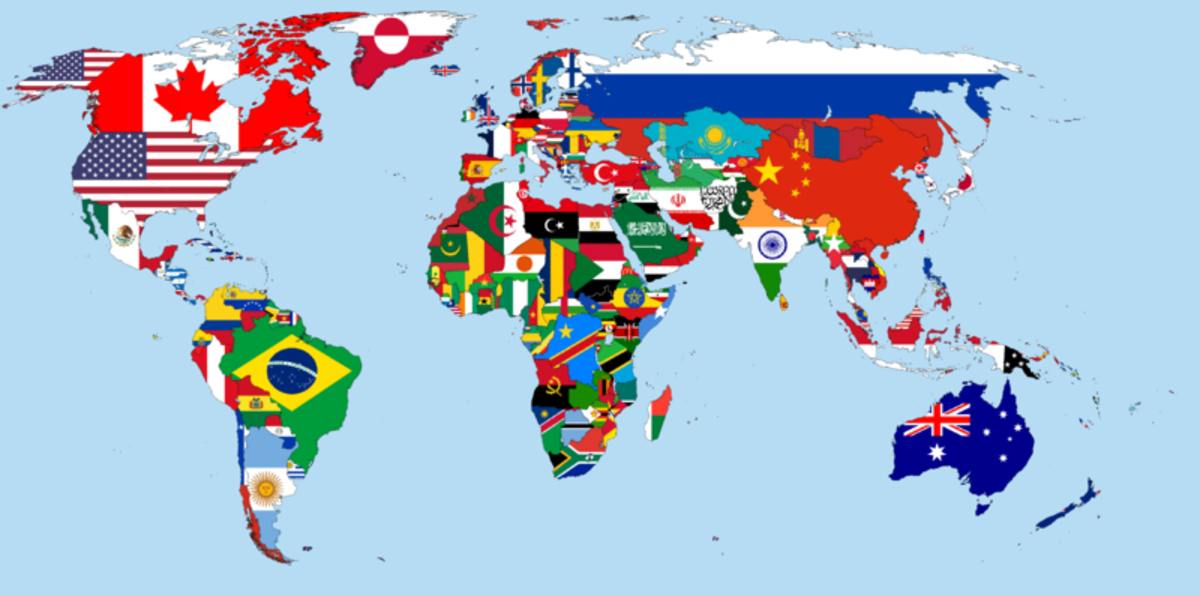
The Bible on Borders
Biblically, the concept of separate nations finds robust support, reflecting God’s intentional design for humanity. Acts 17:26 declares, "And he made from one man every nation of mankind to live on all the face of the earth, having determined allotted periods and the boundaries of their dwelling place." This verse underscores that God Himself established distinct nations, assigning them specific territories and times, suggesting borders are divinely ordained to maintain order among diverse peoples.
The Tower of Babel (Genesis 11:1-9) further illustrates this: when humanity sought a unified, boundary-less existence in defiance of God, He scattered them into separate nations with distinct languages - a dispersion that curbed pride and fostered variety under His sovereignty. Deuteronomy 32:8 echoes this, noting that God "fixed the borders of the peoples according to the number of the sons of God," affirming national distinctions as part of His plan.
This biblical framework emphasises stewardship and responsibility, not isolation. In 1 Timothy 5:8, Paul instructs, "But if anyone does not provide for his relatives, and especially for members of his own household, he has denied the faith and is worse than an unbeliever." Applied nationally, this principle implies governments must prioritise their citizens’ welfare - securing resources and safety through borders - before extending aid beyond.
Scripture balances this with compassion toward strangers, as Leviticus 19:34 commands, "The stranger who sojourns with you shall be to you as the native among you, and you shall love him as yourself." Yet, this call to hospitality occurs within a context of ordered society, not an endorsement of unchecked entry. The Hebrew term "ger" (sojourner) implies a resident alien under legal oversight, not a mass influx overwhelming a nation’s capacity, as seen in Israel’s own border laws (Numbers 20:14-21, where Edom denies passage to Israel, asserting sovereignty).
Far from advocating open borders, the Bible portrays nations as distinct entities with a right to self-governance. In Revelation 21:24-26, the New Jerusalem features nations bringing their glory through gates - implying regulated access even in eternity. Joshua’s conquest of Canaan (Joshua 1-12) shows God assigning specific land to Israel, defending its borders against invaders, while Nehemiah rebuilt Jerusalem’s walls (Nehemiah 2:17-20) to protect its identity and security. These examples frame borders as tools of divine order, not xenophobia, enabling nations to fulfil their God-given roles.

The Bible on Immigration
The Bible subtly discourages economic migration by showing its pitfalls. An example of this can be found in the book of Ruth: facing famine in Judah, Elimelech migrates to Moab for economic relief (Ruth 1:1-2), but his family suffers - he and his sons die, leaving his wife, Naomi widowed and childless (Ruth 1:3-5). This suggests leaving God’s land for material gain brings loss, not blessing. Naomi returns to Judah when God restores it (Ruth 1:6-7), and Ruth’s choice to follow (Ruth 1:16) is covenantal, not economic. Their restoration through Boaz’s provision (Ruth 2:2-16, 4:13-17) shows God sustains within one’s appointed place, per Acts 17:26, which notes God set nations’ boundaries.
Similarly, Lot’s migration to Sodom (Genesis 13:10-12) exemplifies failed economic migration. Drawn by the fertile Jordan Valley’s wealth, Lot settles near Sodom, a wicked city. His choice leads to captivity (Genesis 14:12), near destruction (Genesis 19:15-26), and moral compromise—his wife perishes, and his daughters sin (Genesis 19:30-38). Like Elimelech, Lot’s pursuit of prosperity outside God’s guidance ends in ruin, reinforcing that economic migration defies divine order (Deuteronomy 28:15-18).
Biblically, this fits a pattern discouraging economic migration as a first resort. Acts 17:26 states God "determined allotted periods and the boundaries of [nations’] dwelling place," suggesting a divine intent for people to thrive within their assigned lands. Deuteronomy 28:15-18 warns that abandoning God’s ways - such as fleeing His land in distrust - brings curses, including economic hardship.
The prodigal son (Luke 15:11-32) parallels this: leaving home for gain leads to loss, while return brings redemption. Ruth’s story contrasts Elimelech’s migration with Naomi’s return, framing the latter as the path of faith. Ruth’s inclusion, while a foreigner, hinges on her adoption into Israel’s covenant, not her economic ambition, aligning with Leviticus 19:34’s call to integrate sojourners under God’s law, not to encourage borderless wandering.
Contextually, the famine in Judah (Ruth 1:1) mirrors Israel’s cycles of disobedience and restoration in Judges, where God uses hardship to draw His people back (Judges 2:14-19). Elimelech’s departure can be seen as a lack of faith in God’s ability to provide, a contrast to figures like Abraham, who stayed in Canaan despite famine, trusting God’s promise (Genesis 12:10, though he briefly went to Egypt). Moab’s allure - economic survival - proves illusory, as the family’s losses outweigh any gain. Ruth’s gleaning, conversely, shows God’s provision within Judah, discouraging reliance on foreign lands.
Critics might argue Ruth herself is a migrant, her story celebrating cross-border movement. Yet, her journey is not economic but covenantal - she binds herself to Naomi’s God and people, not Bethlehem’s resources. The text never praises Elimelech’s initial move; it frames it as a desperate act with dire results. Statistically, modern parallels -mass migration straining host nations (e.g., 1.3 million arrivals in Europe in 2015, per Eurostat) - echo this tension, though Ruth’s era lacks such data. Theologically, the story prioritises staying and trusting over fleeing for gain.
Jesus, Mary, and Joseph, however, were not immigrants. Their flight to Egypt (Matthew 2:13-15) was a temporary escape from Herod’s threat, not a quest for economic gain. They returned to Nazareth once safe (Matthew 2:19-23), remaining within Israel’s covenant land, not settling abroad. This distinguishes their journey from economic migration, aligning with biblical calls to trust God’s provision (Leviticus 19:9-10) rather than flee for worldly advantage.

Control, not Chaos
Historically and today, nations ignoring border control face erosion of sovereignty and stability. Rome’s fall in 476 AD partly stemmed from uncontrolled barbarian migrations overwhelming its frontiers, a cautionary tale echoed in modern Europe’s migrant crisis or the U.S. southern border, where 2.2 million encounters were recorded in 2022 alone (U.S. Customs and Border Protection).
Conversely, nations like Japan, with strict immigration (0.6% foreign-born population, per OECD) and a fertility crisis, maintain cultural cohesion despite demographic challenges—proof that borders can preserve identity, though not without trade-offs.
Critics might argue borders defy Christian universalism, citing Galatians 3:28 ("neither Jew nor Greek"). Yet, this speaks to spiritual equality, not the dissolution of earthly distinctions. Compassion for migrants—rooted in Matthew 25:35 ("I was a stranger and you welcomed me")—doesn’t negate a nation’s right to regulate entry; it calls for justice, not chaos.
Open-border policies, while pitched as humane in intent, often enable trafficking (e.g., 1,500 unaccompanied minors lost by U.S. agencies in 2022, per HHS) and destabilise societies, contradicting biblical order.
Nations need border control to uphold sovereignty, ensure security, and maintain economic and social stability - responsibilities grounded in God’s creation of distinct peoples with defined boundaries (Acts 17:26). Scripture supports this through examples of stewardship and order, balancing compassion with the duty to protect.
Without borders, nations risk losing their God-ordained identity and capacity to thrive, a lesson borne out in both biblical narrative and contemporary reality.